
7. Self Defeating Beliefs & Behaviors
Common Self-Defeating Beliefs
- Perfectionism. I must never fail or make a mistake. If it's not perfect, it's a total failure. If I don't DEMAND perfection of myself, how will I ever succeed at ever meeting any of my goals?
- Perceived Perfectionism. People will not love and accept me as a flawed and vulnerable human being.
- Achievement Addiction. My worthiness depends on my achievements, intelligence, talent, status, income, or looks.
- Hopelessness. My problems could never be solved. I could never feel truly happy or fulfilled.
- Worthlessness / Inferiority. I'm basically worthless, defective, and inferior to others.
6. Approval Demands. I need others' approval to be worthwhile. How many Followers, likes and subscribes do I have?
- Love Demands. I can't feel happy and fulfilled without being loved. I MUST be loved.
- Fear of Rejection. If you reject me, it proves that there's something wrong with me. If I'm alone, I'm bound to feel miserable and worthless.
- Pleasing Others. I should always try to please others, even if I make myself miserable in the process.
- Conflict Phobia. People who love each other shouldn't fight. Conflict is scary. Better to avoid it and not make waves.
- Self-Blame. The problems in my relationships are bound to be my fault.
- Emotional Perfectionism. I should always feel happy, confident, and in control.
- Anger Phobia. Anger is dangerous and should be avoided at all costs.
- Emotophobia. I should never feel sad, anxious, inadequate, jealous or vulnerable. I should sweep my feelings under the rug and not upset anyone. I should only feel "happy" and be "nice" all of the time.
- Perceived Narcissism. The people I care about are demanding, manipulative, and powerful. They MADE me feel bad about myself.
- Brush fire Fallacy. People are clones who all think alike. If one person looks down on me, the word will spread like brush fire and soon everyone will look down on me. Everyone will think I'm ____ !
- Spotlight Fallacy. Talking to people feels like having to perform under a bright spotlight on a stage. If I don't impress people by being sophisticated, witty, or interesting, they won't like me. I have to be "on"
- Magical Thinking. If I worry enough, everything will turn out okay.
- Other-Blame. The problems in my relationships are the other person's fault.
- Entitlement. You should always treat me in the way I expect. You should always meet my expectations.
- Truth. I'm right and you're wrong. The world should acknowledge my being right!
- Low Frustration Tolerance. I should never be frustrated. Life should be easy. It's hard to ____ !
- Superman / Superwoman. I should always be strong and never be weak. I should never have struggles, make mistakes, or suffer.
In REBT, common irrational assumptions that, if addressed, could alleviate distressing responses to negative events.
Some of these include:
- The idea that people should be completely competent at everything
- The idea that it’s a disaster when things aren’t exactly how we want them to be
- The idea that we have no control over our happiness
- The idea that we need someone stronger than ourselves to depend on
- The idea that our past holds a strong influence over our present life
- The idea that all problems must have a perfect and findable solution
- The idea that we are bad (or other types of labeling)
(Source)
 Oana David
Coaching is primarily conceptualized as an adult learning strategy, using focused conversations between a coach and coachee, where the coach acts as a catalyst for the coachee’s learning process in relation to their goal/issue. Change processes are facilitated by the coach through the use of effective questioning – derived from counseling - meant to assist the coachee in order to formulate realistic goals, overcome obstacles and implement effective steps in reaching their goals.
ACT (Acceptance and Commitment Theory/Therapy describes these concepts as your mind being fused with one or a number of areas:
- fusion with the past
- fusion with the future
- fusion with self concept
- fusion with reasoning
- fusion with rules
- fusion with judgement
In Acceptance and Commitment Coaching, the goal is more open thinking with a commitment to meaningful change towards acceptance.


Acceptance and Commitment-Based Coaching (known as AC Coaching) is a theory-driven, research-informed coaching approach to help people live their best possible lives, take committed action in line with their values and better manage the unwanted, uncomfortable and even painful thoughts and feelings which inevitable show up along the way.
CPT, or Cognitive Processing Theory/Therapy describes this as "stuck points", that circuitry loop that fires when you feel triggered.

 Eric W. Dolan
(2026): "findings suggest that mental habits play a significant role in shaping a person’s emotional experience…people create their own realities through the types of thoughts that they have. Individuals prone to negative affect seem to be contributing to their negative affect by choosing to think about problems and uncertainties under default conditions —findings could point to ways that pessimistic ways of living could be changed."
 Dan Pilat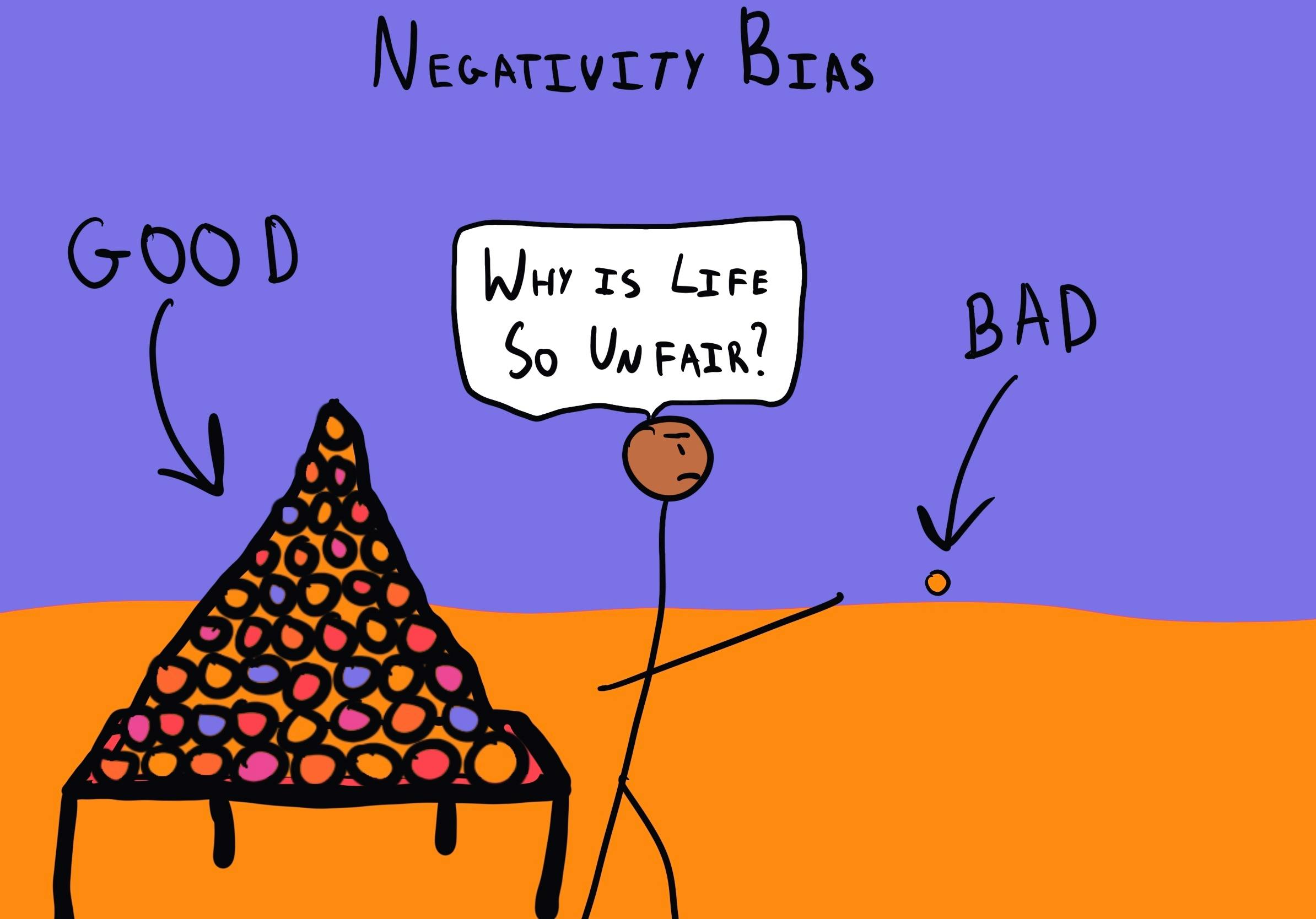
The negativity bias is a cognitive bias that results in adverse events having a more significant impact on our psychological state than positive events. Negativity bias occurs even when adverse events and positive events are of the same magnitude, meaning we feel negative events more intensely.

What situations make it hard for you to set or keep boundaries? Do you ever feel guilty, anxious, or unsure when trying to speak up? Are there specific people or patterns that challenge your boundaries?
2026: "Feeling like you slept poorly might take a heavier toll on new parents than actual sleep loss-- psychological struggles may actually worsen how parents experience their sleep, particularly later in the first year when infants typically begin sleeping more consistently.
 Bianca Setionago
2025 "These results contribute to our conceptualization of substance use severity by suggesting that inconsistency in using cost information, rather than insensitivity to costs, may inform choices to continue using substances despite incurring negative consequences"
 Eric W. Dolan
2026: "The findings indicate that depression is strongly linked to expecting and experiencing fewer desirable outcomes. People with high levels of depression displayed a clear pessimistic bias, specifically regarding positive events. They consistently predicted that positive events were less likely to happen than they actually were."
The Relationship Between ADHD and Procrastination (2026)
Liz Nissim Ph.D.
 Olivia Guy Evans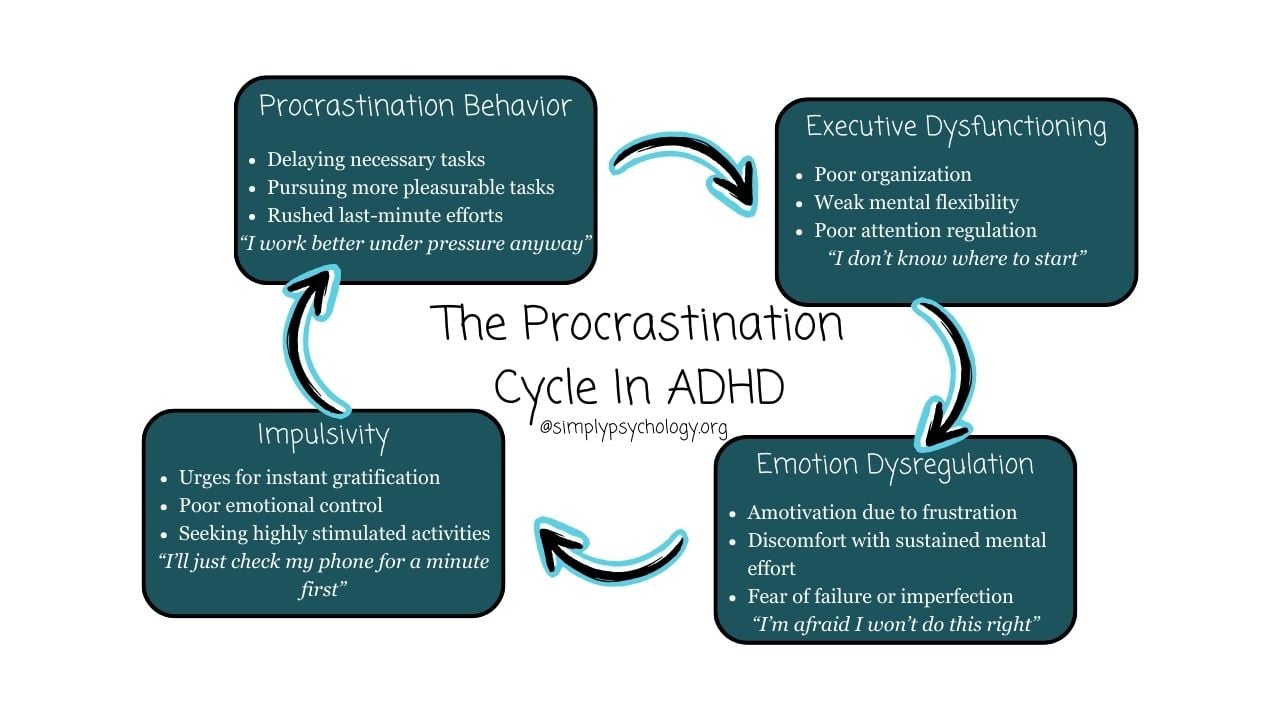
 Kwynn Gonzalez-Pons
 Michael DeMarco, PhD
Review of the research on chronic stress, inflammation and mental health
Michael DeMarco, PhDReview
Michael DeMarco, PhDReview
Michael DeMarco, PhDReview
Michael DeMarco, PhDReview
Michael DeMarco, PhDTable of Contents

Try an ABC exercise