
15. Mortality
Acceptance, Forgiveness, Compassion & Love
What do you have to grieve that may feel like guilt, denial, panic, anger, depression, or dread in your body, mind, heart and Self?
A relationship with a person? A pet? The idea you had for what you thought would make for a happy, healthy, stable life? Do you grieve a part of your Self? Or a part of the Self of someone you love? Do you grieve for the planet, or part of it you love and call home?
It's not always life and death, but contemplation of mortality is considered one of the 4 Ultimate Concerns in existential philosophy, along with finding meaning, connection, a sense of free will, and making sure you are living your best life, while not forgetting that death comes for us all. There may be value in contemplating then committing to action to find balance in those areas.
 Michael DeMarco, PhD
Rapid Relief of Complicated Grief State By Application of Ketamine Facilitated Psychotherapy (2022)
"his is the first case reported where ketamine was used to treat pathological grief in a dyad. The successful nature of this therapy is the transformational aspect of the psychedelic experience, when the subject enters the transpersonal 'sacred' space thus facilitating access to the so-called ‘inner healer.’ The intention of ketamine assisted psychotherapy is by increasing troche doses in a sequential fashion to put the patient in a transpersonal space thus manifesting psychological transformation (defined here as rapid, marked and enduring psychological change, where ‘psychological’ refers to perception, cognition and action or behavior). Brouwer & Carhart-Harris6 have recently adduced a theory of psychological transformation that theoretically accounts for such psychological transformative events the so-called pivotal mental state, which is defined as a hyper-plastic state aiding rapid and deep learning that can mediate psychological transformation. Rather than simply referring to adaptive responses to stress and adversity, which could include many of the symptoms of psychiatric disorders, the PiMS model is intended to invoke the idea that such adaptation can be radical, rapid and discrete, rather than moderate, slow and continuous. Rigorous Clinical Trials Need To Be Done To Establish The Generalizability Of This Novel Therapy For Individual &Dyadic Grief Work Structure of the NMDR Receptor
"After the second mutual Ketamine experience, they entered the transpersonal therapy space, and their post-session PHQ-9/GAD-7 scores were 0/0. "
Navigating Hope and Healing: A Case Report on Ketamine Assisted Therapy (Cole, et al, 2025)
"1. therapeutic potential of ketamine in managing emotional and psychological symptoms, such as anxiety and depression, in patients with terminal illnesses, and describe how ketamine can improve emotional resilience and mental well-being in palliative care settings. 2. Identify appropriate dosing strategies and administration routes for ketamine therapy in complex palliative care cases, emphasizing tailored treatment approaches, patient comfort, and the integration of psychological support techniques to enhance overall quality of life.
Michael DeMarco, PhD Michael DeMarco, PhDMichael DeMarco, PhD
 Michael DeMarco, PhDMichael DeMarco, PhD
 Michael DeMarco, PhDStefan Aguiar
Intranasal Ketamine for Existential Distress in Advanced Cancer (2026) https://pubmed.ncbi.nlm.nih.gov/42055096/ Intranasal ketamine was associated with clinically meaningful improvements in existential distress in individuals with advanced cancer being treated for depression. Ketamine may have relevance as a single agent for multidimensional distress in palliative care.
Michael DeMarco, PhDTherapist Aid ✉Corresponding Author: Eliezer Soto, 10 Center Drive MSC 1517 2-1733, Bethesda, MD 20892, USA elisotochpnet.org
2014: "Oral administration of ketamine may be as effective as the parenteral route for treating chronic pain in the palliative care population, allowing patients to continue their normal activities and adding to quality of life."
Rapid Resolution of Grief with IV Infusion of Ketamine: A Unique Phenomenological Experience (2016)
With the patient and immediate family members consenting for use of ketamine as off-label use, patient had single IV infusion of ketamine following which he had unique phenomenological experience ultimately resolving his grief in few minutes. Through this case we highlight the enormous therapeutic promise of ketamine in complicated grief.
Therapeutic infusions of ketamine: Do the psychoactive effects matter?(Dakwar, et al, 2014) "The role of mystical states in robust clinical improvement has been frequently noted in the literature on recovery, with individuals reporting that efforts toward abstinence were promoted by experiences with mystical characteristics (Miller and C'de Baca, 2001; Miller, 2004). It is, therefore, possible that the improvements in cocaine users we reported previously were influenced by ketamine-induced mystical-type phenomena. This analysis examines the mystical-type effects of the ketamine infusions administered previously (Dakwar et al., 2013) and investigates whether these phenomena mediate ketamine efficacy, 24 h postin-fusion. We predict that ketamine infusions dose-dependently promote transient mystical-type effects, assessed with items from a widely used mystical experience scale (Hood, 1975; Hood et al., 2001). Further, we predict that the intensity of the mystical experience, but not of dissociative phenomena, serves to mediate the effects of the initial ketamine dose (0.41 mg/kg over 52 min) on motivation to quit cocaine and cue-induced craving."
"Transformative effects of spontaneous out of body experiences in healthy individuals: An interpretative phenomenological analysis. (2026) An out of body experience (OBE) happens when an individual experiences the world from a location seemingly outside of their physical body. They occur in around 10% of the population, yet little research has explored the psychological aftereffects of OBEs, or their transformative potential. This study is an interpretive phenomenological analysis (IPA) of the experiences of eight healthy participants who have undergone one or more spontaneous OBEs. Semistructured qualitative interviews were used. The analysis of transcripts resulted in the emergence of eight superordinate themes: (a) motivational catalyst; (b) decreased fear of death; (c) increased inner peace; (d) new life perspective; (e) greater self-awareness; (f) sense of individuality; (g) reevaluated relationships, and (h) affirmed or new spiritual beliefs. Of these, a decreased fear of death appeared to play a key role, acting as a purported mediator underpinning further psychological changes. This could have clinical implications, with death anxiety being a transdiagnostic construct linked to general psychopathology and anxiety and depressive disorders that is usually resistant to change. The findings suggest that the OBE could be categorized as a quantum change experience, with potential psychological benefits to the experiencer. This experience could be drawn upon within a clinical and therapeutic context and provide a basis for further research which could assess the type and depth of psychological transformation associated with OBEs.
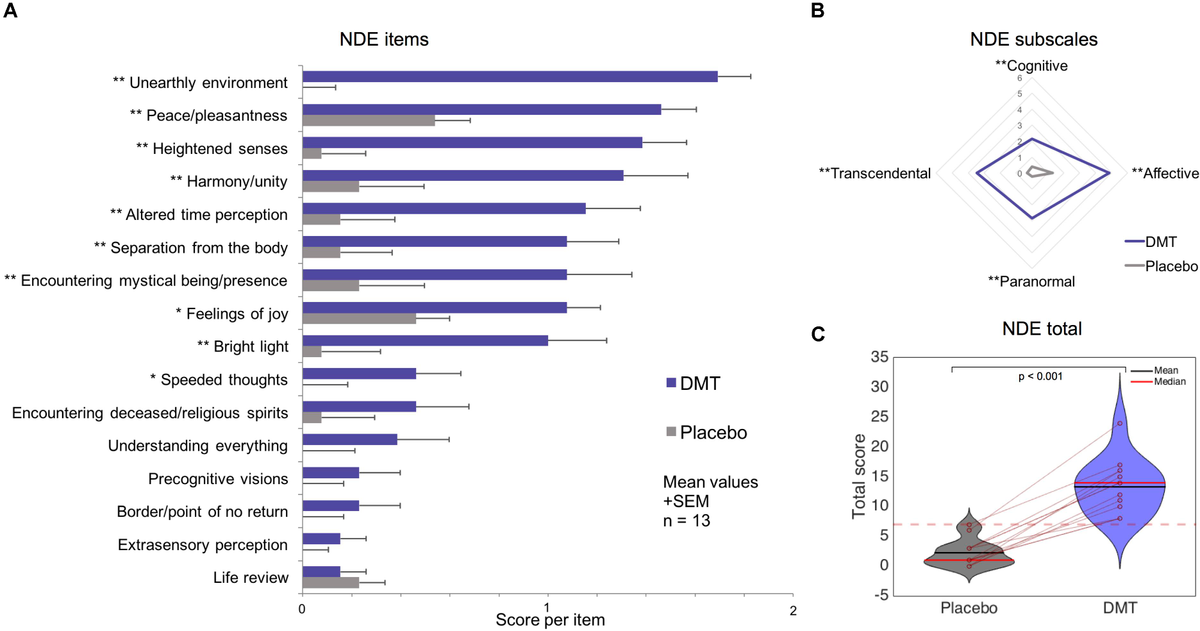
DMT Models the Near-Death Experience (Timmerman, et al, 2018) Near-death experiences (NDEs) are complex subjective experiences, which have been previously associated with the psychedelic experience and more specifically with the experience induced by the potent serotonergic, N,N-Dimethyltryptamine (DMT). Potential similarities between both subjective states have been noted previously, including the subjective feeling of transcending one’s body and entering an alternative realm, perceiving and communicating with sentient ‘entities’ and themes related to death and dying. In this within-subjects placebo-controled study we aimed to test the similarities between the DMT state and NDEs, by administering DMT and placebo to 13 healthy participants, who then completed a validated and widely used measure of NDEs. Results revealed significant increases in phenomenological features associated with the NDE, following DMT administration compared to placebo. Also, we found significant relationships between the NDE scores and DMT-induced ego-dissolution and mystical-type experiences, as well as a significant association between NDE scores and baseline trait ‘absorption’ and delusional ideation measured at baseline. Furthermore, we found a significant overlap in nearly all of the NDE phenomenological features when comparing DMT-induced NDEs with a matched group of ‘actual’ NDE experiencers. These results reveal a striking similarity between these states that warrants further investigation.
Charlotte Martial(2019): Near-death experiences (NDEs) are comparable among individuals of different cultures, suggesting an underlying neurobiological mechanism. Anecdotal accounts of the similarity between NDEs and certain drug-induced altered states of consciousness prompted us to perform a large-scale comparative analysis of these experiences. After assessing the semantic similarity between ≈15,000 reports linked to the use of 165 psychoactive substances and 625 NDE narratives, we determined that the N-methyl-D-aspartate (NMDA) receptor antagonist ketamine consistently resulted in reports most similar to those associated with NDEs. Ketamine was followed by Salvia divinorum (a plant containing a potent and selective κ receptor agonist) and a series of serotonergic psychedelics, including the endogenous serotonin 2A receptor agonist N,N-Dimethyltryptamine (DMT). This similarity was driven by semantic concepts related to consciousness of the self and the environment, but also by those associated with the therapeutic, ceremonial and religious aspects of drug use. Our analysis sheds light on the long-standing link between certain drugs and the experience of "dying", suggests that ketamine could be used as a safe and reversible experimental model for NDE phenomenology, and supports the speculation that endogenous NMDA antagonists with neuroprotective properties may be released in the proximity of death.
"My ketamine experience was very spiritually affirming. My understanding of God has changed. There is this mystery behind the universe and our religious traditions are metaphors and symbols that point at that larger reality. Our religious traditions are like user interfaces on a computer. The guts of a computer are a complete mystery to me, but because I have this user interface I can get a lot of work done. This is what religions do for us. We enter into relation with mystery and create meaning. (Can Psychedelics Guide a Mystic’s Path to Mystery? Lucid News, Feb 13th, 2023)
 Katie MacBride
(2023): "Bill Wilson, founder of Alcoholics Anonymous — Wilson believed other recovering alcoholics could benefit from taking LSD as a way to facilitate the “spiritual experience” he believed was necessary to successful recovery. We know this from Wilson, whose intractable depression was alleviated after taking LSD; his beliefs in the power of the drug are documented in his many writings."
Subtypes of the psychedelic experience have reproducible and predictable effects
on depression and anxiety symptoms (Nikolaidis, et al, 2023)
https://www.sciencedirect.com/science/article/abs/pii/S0165032722013908
Amirhossein Hashemi and Ali Akbar Oroojan and Maryam Rassouli and Hadis Ashrafizadeh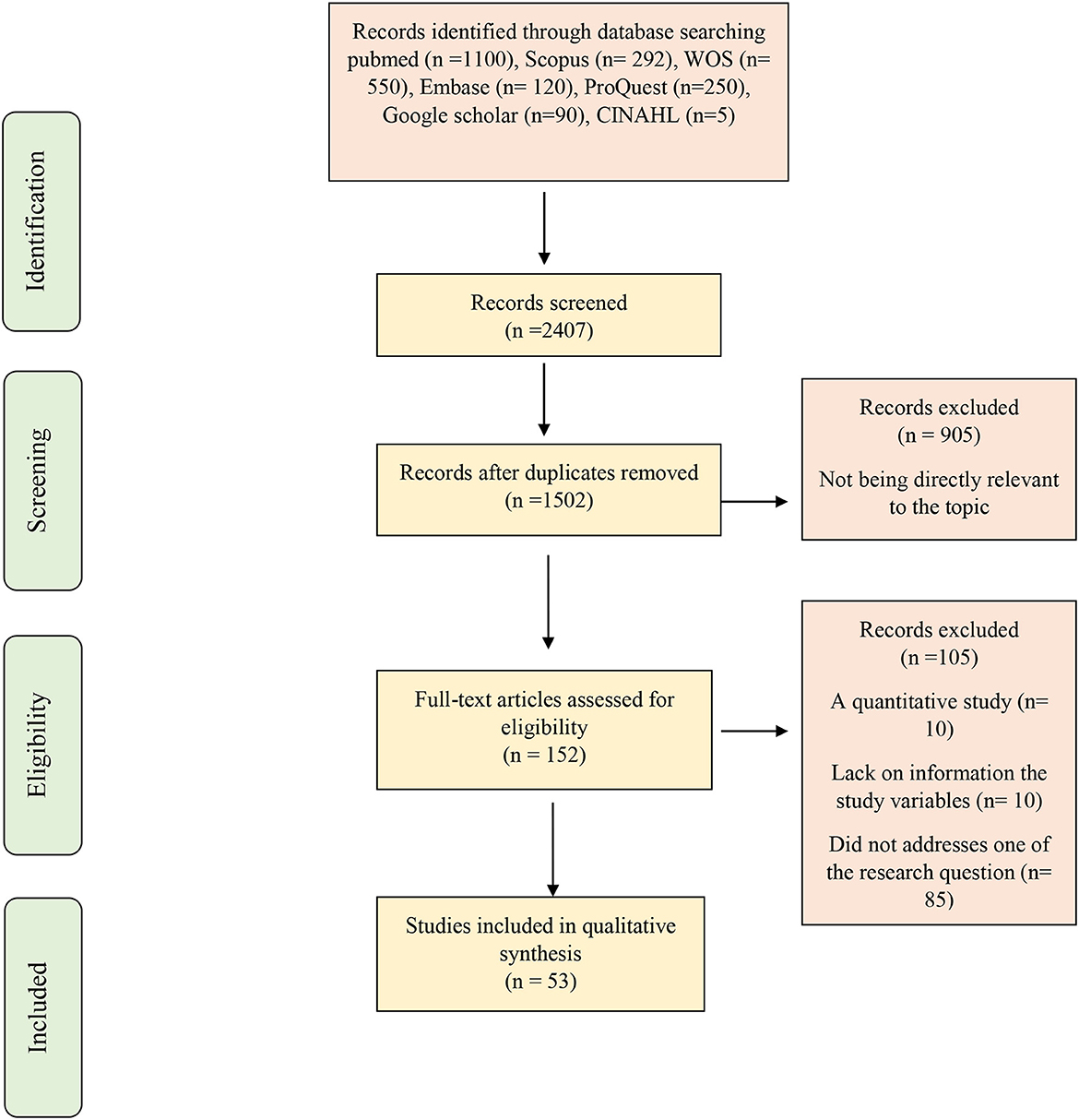
Explanation of near-death experiences: a systematic analysis of case reports and qualitative research (Hashemi, et al 2023): "