Rational Ketamine Practice and the Current Ketamine Discourse

Chinese Character Gives Insight Into Traditional Chinese Medicine
Medicine is characterized by bitterness, yet a patient is able to regain health and happiness only after suffering its bitterness. This paradox has its root in the Doctrine of the Mean, the Confucian classic that teaches that in order to gain an invincible position, one must determine and hold fast to the “mean,” the middle ground between two extremes.
Such a view enables one to find hope amid adversity, and to exercise prudence amid prosperity. From this principle, it can be seen why happiness 樂 is contained in the bitter medicine 藥.
Oligarch-aligned Wall St Journal recent ketamine "Wild West" panic piece points to complexities in working with chemicals as medicines for health and well being, and to the problem of less access for all due to the misuse of some. The March 2026 article attempts to equate psychiatric access to telehealth and a medical practitioner's legally granted ability to provide healthcare within their scope of practice and competency as medical providers.
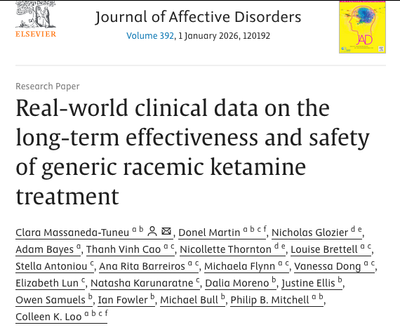
Ketamine has been prescribed safely in various routes of administration protocols as evidence in almost 65 years of pee-reviewed scientific research, adding to an over 100 years of study in psychedelic, entheogenic, plant medicine and synthetically-derived psychoactive compounds such as MDMA, LSD, DMT, ibogaine, ayahausca, various strains of psychoactive mushrooms and fungi. One species of fungi was found to release racemic ketamine when a plant's roots, on which the fungus grows, are attacked by nemotodes.
Studies continue to show that multi-drug use has been involved in most cases of social harm and deaths associated with ketamine, including the tragic death of Matthew Perry. Ketamine misuse is rampant around the world, and especially sensationalized in the UK. The problem is making sure there is an infrustructure available to inform a ketamine protocol that helps users receive the beneficial effects of ketamine, of which the uses in medicine are many, and commonly studied and described in the scientific literature. Of course two wrongs do not make a right, however for some context, it takes 8 or 9 Tylenol for a fatal overdose. Acetominophen is one of the most commonly consumed drugs in the world, and has a host of possible adverse effects when misused, including increased risk-taking behavior (as well as some indications for use as medicine.
"Acetaminophen, an analgesic and antipyretic available over-the-counter and used in over 600 medicines, is one of the most consumed drugs in the USA. Recent research has suggested that acetaminophen’s effects extend to the blunting of negative as well as positive affect. Because affect is a determinant of risk perception and risk taking, we tested the hypothesis that acute acetaminophen consumption (1000 mg) could influence these important judgments and decisions. In three double-blind, placebo-controlled studies, healthy young adults completed a laboratory measure of risk taking (Balloon Analog Risk Task) and in Studies 1 and 2 completed self-report measures of risk perception. Across all studies (total n = 545), acetaminophen increased risk-taking behavior. On the more affectively stimulating risk perception measure used in Study 2, acetaminophen reduced self-reported perceived risk and this reduction statistically mediated increased risk-taking behavior. These results indicate that acetaminophen can increase risk taking, which may be due to reductions in risk perceptions, particularly those that are highly affect laden."
In the WSJ article, a patient who had already been prescribed Xanax combined her prescribed ketamine, a treatment for off-label mental health indications, pain and substance use indications in it's well-studied generic version, as prescribed by licensed medical providers increasing access to healthcare through offering telehealth. These specialist and clinician groups have advanced training and practice in using specific, evidence-based approaches. Sensationalized articles grasp on to the standard 15 minute medical visit as dictated by oligarch-owned insurance companies as being something unique to ketamine, while positioning access to generic ketamine as a danger, and limiting it's use to more medically-advanced protocols in clinics, such as iv-ketamine, injectable ketamine and intransal esketamine sold as Spravato in the US. Incidentally, injectable acetaminophen has the dangerous side effects quoted in the study above.
It is a tragedy when an individual has adverse effects to working with a chemical compound they had hoped would be the medicine for their particular pain and suffering. It is especially tragic when misuse of the medicine to cause personal and/or social harm. Deaths have been attributed to ketamine, Tylenol, ayahausca and LSD chemotherapy, yet this does not negate the facts that these medicines have helped countless people, and that racemic ketamine has been administered safely to billions of people around the world since 1962.
 Michael DeMarco, PhD
 Michael DeMarco, PhD
 Michael DeMarco, PhD
 Michael DeMarco, PhD
 Michael DeMarco, PhD
 Michael DeMarco, PhD
 Michael DeMarco, PhD
 Michael DeMarco, PhD
 Psychedelic Institute
 Michael DeMarco, PhD